
Fixed supply, governed in layers.
1,000,000,000 ACT, mint authority revoked, freeze authority never granted. Every trade has a fee withheld on-chain, which the treasury splits between the climate catalyst fund and a disclosed management fee; the treasury itself is held under multisig custody and released only against verified milestones.
No tiers to choose. One set of fixed, disclosed parameters.
Every ACT transfer has a fee withheld on-chain, split between the climate catalyst fund and a disclosed management fee. The mint itself is closed: no more supply can ever be created, and no wallet can ever be frozen.
One token. Fixed forever.
1,000,000,000 ACT, minted once. Mint authority revoked and freeze authority never granted, so nothing about the supply can change from here forward.
Fee split
| Category | Share |
|---|---|
| Climate catalyst fund | 1% |
| Management | 0.5% |
Token
| Field | Value |
|---|---|
| Total supply | 1,000,000,000 |
| Circulating supply | Not yet trading |
| Mint authority | Revoked |
| Freeze authority | Revoked |
| Decimals | 9 |
Protocol
| Field | Value |
|---|---|
| Network | Solana |
| Token standard | Token-2022 |
| Treasury custody | Squads multisig |
| Governance | Realms |
| Trading pair | ACT / USDT |
Not a forecast: the arithmetic and the incentives.
Why the fee doesn't obviously kill trading, why the commitment is credible rather than cheap talk, and what the fund would actually generate at different levels of volume.
Does a 1.5% fee meaningfully deter trading?
It's a real cost, and no trading history yet exists to measure the answer empirically. Two things are still worth noting. First, transfer fees in this general range aren't unusual among comparable Solana Token-2022 assets that have achieved meaningful volume; the fee alone isn't obviously prohibitive at this scale. Second, and more specific to this design: the fee is fixed and fully disclosed before any transaction, unlike slippage or price impact, both of which vary with trade size and pool depth and are frequently larger in absolute terms than the fee itself. A rational trader prices a known, fixed cost into their decision the same way they'd price any other one.
Whitepaper §12.1
Why "code-enforced" is a different claim than "we promise"
Economics has a name for the difference: cheap talk versus a credible commitment device. A stated intention the issuer could costlessly reverse, such as "we'll donate a share of proceeds," is cheap talk regardless of how sincerely it's made. A property enforced by an immutable, permissionless token standard, verifiable by anyone without trusting the issuer's account of it, is a credible commitment in the technical sense: the cost of reneging isn't just reputational, it's architectural, since reneging would require rewriting a mint configuration that no longer has an authority capable of rewriting it. That's what permanently revoking mint authority actually buys, at the cost of the immutability tradeoff described in the tokenomics section above and the whitepaper.
Whitepaper §12.2
The catalyst fund only works if someone provides liquidity
Whoever eventually supplies the other side of the ACT-USDT pool bears impermanent loss, a standard, well-documented property of automated market making, not a feature specific to this token. It's worth stating plainly because the fund's continuous replenishment depends on trading volume, and trading volume depends on liquidity existing in the first place, which in turn depends on someone accepting that risk in exchange for a share of trading fees. As of this writing, no liquidity pool has been seeded yet; an initial, self-funded seed is planned, sized to deepen gradually rather than launch at full depth immediately. See the roadmap.
Whitepaper §12.3
What real volume would generate
The output is arithmetic, not a forecast: these rows are round numbers chosen for illustration, not a projection of what volume will actually occur. No step depends on price, sentiment, or continued attention to the protocol's mission.
Fixed function of volume.
Computed identically whether that volume reflects one large trade or ten thousand small ones. This is not a representation about which, if any, row below will resemble actual future volume.
Aggregate volume
| Volume | Catalyst fund | Management |
|---|---|---|
| $10,000 | $100 | $50 |
| $100,000 | $1,000 | $500 |
| $1,000,000 | $10,000 | $5,000 |
Treasury & custody
The treasury is Aretia's catalyst fund: a standing, continuously replenished pool, not a one-time pledge or a grant round that depletes and has to be re-raised. Accumulated fees settle into a Squads multisig, live on mainnet at GtKGE6mQRj...bryZnA, with the full propose-approve-execute cycle already tested end to end.
Two forms of disbursement.
Grants: a lump-sum transfer to a vetted project partner not itself tokenized, such as a reforestation cooperative or community solar developer. Retirements: the treasury buys and permanently retires tokenized carbon credits on-chain, producing a provable, quantified tonnes-CO2 figure tied to a transaction hash.
Functional allocation
| Category | Share |
|---|---|
| Climate mitigation | 60% |
| Climate adaptation | 20% |
| Ecosystem development | 10% |
| MRV / verification | 5% |
| Emergency reserve | 5% |
An illustrative starting configuration, revisable by Layer 1 governance once it activates, not fixed by the mint. The separate 0.5% management fee settles in its own wallet, deliberately outside this multisig, so it can never be commingled with project-funding assets even by accident.
Governance: four layers, not one vote
Flat "holders vote on every payout" governance breaks the moment a treasury is large enough to be worth attacking: a single well-organized proposal can extract real money from a naive vote. ACT governance runs in four layers instead.
- 01
Community
Token holders, via Realms / SPL Governance, vote on funding priorities, project categories, and treasury allocation weights, not individual project payouts.
- 02
Technical committee
Domain experts screen individual project applications against climate-science credibility, MRV soundness, financial feasibility, and social/environmental risk.
- 03
Independent verification
A party independent of both the protocol team and the project developer confirms a funded project actually did what it claimed, before further milestone funds release.
- 04
Smart-contract execution
Funds move only after Layers 2 and 3 have both signed off on a given milestone. No human discretion is exercised at the point of transfer itself.
Governance is phased in, not switched on at launch: the treasury runs on team-curated grants first, with Layer 1 voting handed over once there's a large enough, engaged holder base for it to be meaningful rather than symbolic.
Milestone financing
Approved projects don't receive their full commitment as one lump sum.
Capital releases in tranches tied to verified progress: an approval commits a total amount, then each tranche releases only after independent verification (Layer 3) confirms the prior milestone was actually met. This is the structural mechanism that keeps "the treasury financed a project" from silently meaning "the treasury sent money to a project that never finished."
Project portfolio
"Tied to many climate-friendly projects" means the treasury spreads across categories rather than committing to one. Each category carries its own diligence bar; none of this is decided by the smart contract, it's a curation and governance question that sits entirely off-chain.
| Category | Verified output | Diligence standard |
|---|---|---|
| Renewable energy | Metered generation capacity added | Independent engineering certification; interconnection or off-take documentation |
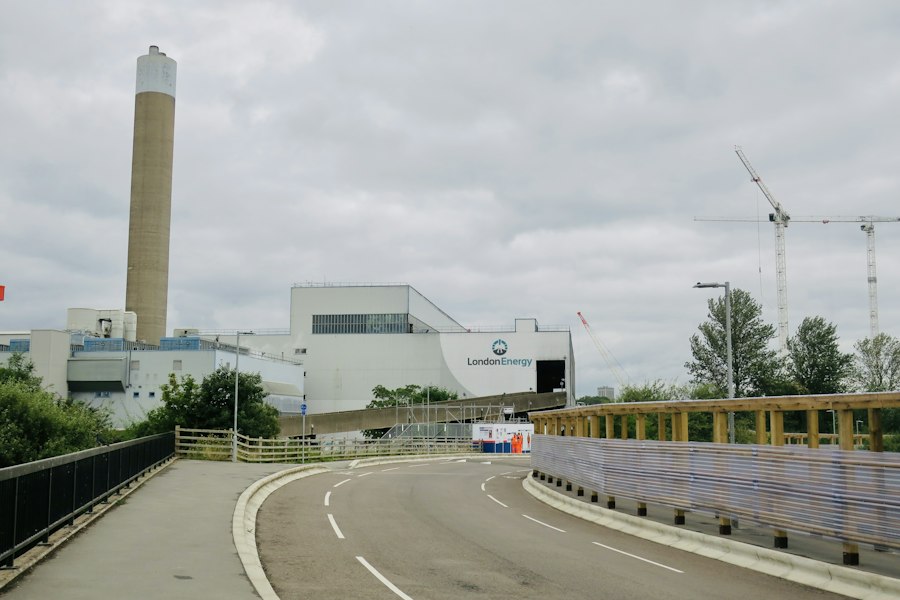
| Waste-to-energy | Waste diverted and energy generated | Facility operating permits, throughput metering, emissions monitored against a baseline |
| Carbon reduction | Emissions avoided or removed | Registry-issued credits: Verra, Gold Standard, or a comparable third-party MRV protocol |
| Technical assistance | Capacity delivered: studies, training, MRV systems built | Deliverable-based milestones; independent review of the technical work product |
| Flood mgmt. & reforestation | Hectares restored; flood-risk reduction achieved | Remote-sensing canopy verification; hydrological modeling or post-event assessment |
Fee & funding questions.
How much is the transfer fee, and where does it go?
Can the team just decide not to route the fee where it says it will?
How does a project actually get funded?
Do token holders vote on which projects get funded?
Can I apply for project funding?
Everything Aretia does.
See all features →The future of money
should fund the future.
ACT is live on Solana today, automatically funding a Climate Treasury on every transfer. The wallet brings self-custody across six chains as it ships.
The wallet's browser extension is in development and not yet on the Web Store.